





Welcome back to A Read of Ice and Fire! Please join me as I read and react, for the very first time, to George R.R. Martin’s epic fantasy series A Song of Ice and Fire.
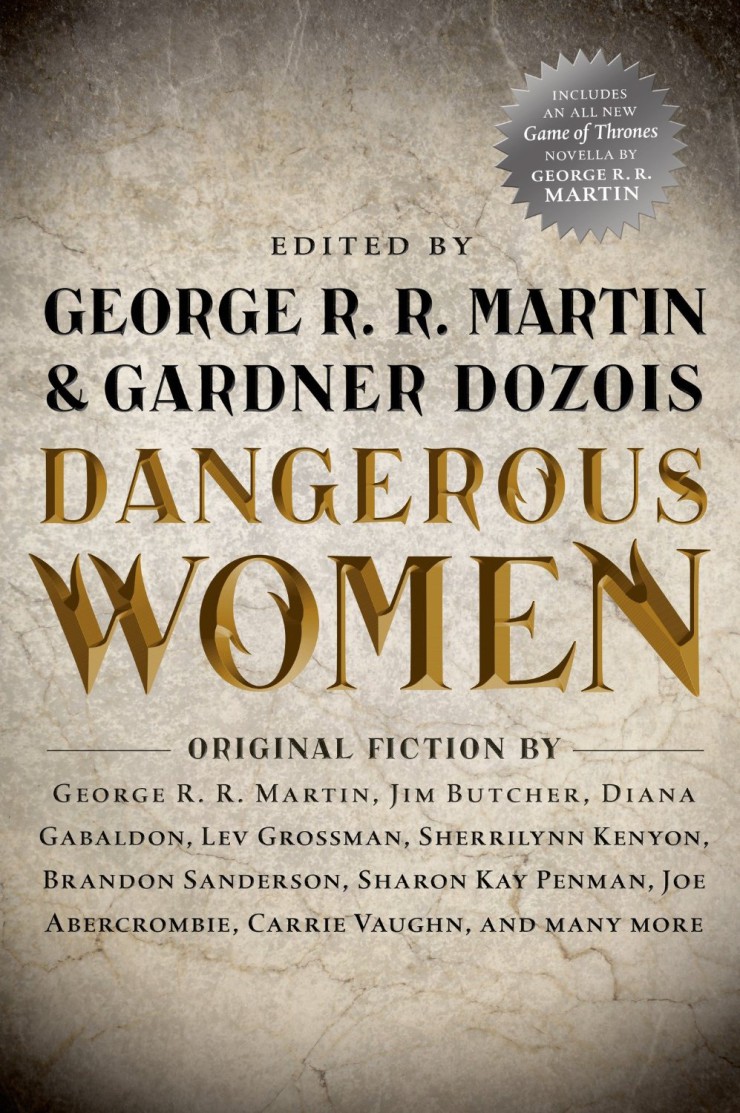
Today’s entry is Part 3 of “The Princess and the Queen, Or, The Blacks and the Greens: Being A History of the Causes, Origins, Battles, and Betrayals of that Most Tragic Bloodletting Known as the Dance of the Dragons, as set down by Archmaester Gyldayn of the Citadel of Oldtown”, (wheeze) which originally appeared in the anthology Dangerous Women, edited by George R.R. Martin and Gardner Dozois.
Previous entries of the Read are located in the Index. The only spoilers in the post itself will be for the actual section covered and for the material covered previous to this post. As for the comments, please note that the Powers That Be have provided you a lovely spoiler thread here on Tor.com. Any spoileriffic discussion should go there, where I won’t see it. Non-spoiler comments go below, in the comments to the post itself.
And now, the post!
[Note: This part covers pages 756 to the end in the Kindle ebook edition of the anthology, starting with the paragraph that begins “Back in King’s Landing, Queen Rhaenyra was finding herself ever more isolated with every new betrayal.” Sorry if that pagination doesn’t match your particular edition.]
The Princess and the Queen: Part 3
What Happens
Queen Rhaenyra’s problems in King’s Landing continue to mount. The defection of accused traitor Addam Velaryon and the subsequent imprisonment of Lord Corlys Velaryon loses Rhaenyra the considerable support of that entire House, who abandon her cause in droves. Then Helaena Targaryen kills herself, and the rumor that she was murdered spreads like wildfire, and the city soon erupts in rioting. The City Watch mounts a valiant defense against the mob, but are overwhelmed by sheer numbers, and by dawn the city is burning.
The queen, enraged by her losses to the mob and the news of the Prince Daemon’s (and Lord Mooton’s) defection over the girl Nettles, refuses her son Joffrey’s plea to let him take his dragon Tyraxes up to pacify the city, fearing to lose him. The rioting worsens the following night, and a prophet called The Shepherd incites the crowds to madness, claiming that they must destroy all dragons everywhere to cleanse themselves of hellfire, and a mob of some ten thousand descends upon the Dragonpit. Rhaenyra refuses to send help, believing that surely the dragons could defend themselves, and Prince Joffrey tries to steal the Queen’s own dragon Syrax to take him to the Dragonpit and rescue his own dragon Tyraxes. Syrax, however, does not accept Joffrey as a rider, and flings him to his death.
The mob storms the Dragonpit, and though the four dragons there kill hundreds upon hundreds of them, the maddened cityfolk eventually bring them all down, in the same way hordes of starving rats can bring down “bulls and bears and lions”. After, the Queen’s dragon Syrax also attacks the mob even though she could have flown away, and is brought down as well. Stricken by the loss of Joffrey and her dragon, Rhaenyra acknowledges that King’s Landing is lost, and slips out of the city at dawn with her last surviving son, Aegon the Younger.
Meanwhile at Tumbleton, Prince Daeron’s supporters are conspiring to oust the Betrayers Ulf White and Hugh the Hammer, especially Hugh, who was claiming the throne by dint of being the rider of the oldest and largest surviving dragon, Vermithor. After Hugh kills Ser Roger Corne for mocking his claim to kingship, the conspirators want to kill Hugh and Ulf both, but hesitate to lose their dragons. The argument becomes moot, however, when Ser Addam Velaryon attacks the town, determined to redeem his name and prove that he is not a traitor like Ulf and Hugh. He has some four thousand men and his dragon Seasmoke. Daeron and Hightower’s host far outnumber Ser Addam’s, but have grown lax and diminished, and are taken completely by surprise to boot.
Ulf White cannot be roused from his drunken stupor, and sleeps through the entire battle; Hugh Hammer tries to make it to his dragon, but is murdered by Lord Jon Roxton, who is in turn killed by Hugh’s followers. There are conflicting reports of how Prince Daeron died, but some say he never even made it out of his tent before Seasmoke’s flame burned it down around him. But even without her rider, Daeron’s dragon Tessarion flies to attack Seasmoke anyway, and the two young dragons dance a battle in the sky. But then Vermithor joins the fight. Older and much larger than either Seasmoke or Tessarion, Vermithor should have beaten Seasmoke easily, but for unknown reasons Tessarion attacks Vermithor as well, and in the end all three dragons, and Ser Addam Velaryon, fall.
Though they wreaked great havoc, Ser Addam’s men fail to take Tumbleton, and are gone by morning. Silverwing is now the only dragon left, and Ulf White decides that therefore he is the only one left to take the throne. Ser Hobart Hightower, though, poisons Ulf with doctored wine, ending up having to sacrifice his own life to do so. Lord Unwin Peake, the ranking surviving conspirator, tries to find another rider for Sliverwing to no avail, and the remains of Hightower’s host is falling apart. In the end, Peake elects to retreat, making Ser Addam the ultimate savior of King’s Landing, though Queen Rhaenyra knew nothing of it.
With no coin and dwindling allies, Rhaenyra is forced to sell her crown to buy passage on a Braavosi ship to Dragonstone, where she assumes she will be safe, but she is betrayed one last time. Ser Alfred Broome, formerly one of her retainers but resentful that he was passed over for stewardship of Dragonstone, killed Ser Quince and captures Rhaenyra and her son Aegon. He brings her to the castle ward, where a greviously wounded Sunfyre and his rider Aegon II awaits her.
Unbeknownst to the queen, Lord Larys Strong had spirited Aegon II from King’s Landing, and sent his two surviving children away before bringing Aegon himself to the outlying lands of Dragonstone in disguise. It transpires that his dragon Sunfyre, though maimed by his earlier battles, was the one who had fought Grey Ghost, not Cannibal. When Sunfyre returned to Dragonstone, drawn perhaps by Aegon II’s presence, they began to recover together, and Aegon II secured the betrayal of Ser Broome.
However, their taking of the keep was marred by the escape of Prince Daemon’s daughter Lady Baela, who reached her young dragon Moondancer and fought Sunfyre. The fight was mostly even despite Moondancer’s youth owing to Sunfyre’s maiming and wounds, but in the end Sunfyre prevailed, killing the younger dragon (though Baela survived). The cost was high, however, shattering King Aegon’s legs and permanently crippling Sunfyre.
Rhaenyra laughs to see the maimed dragon at first, but then Aegon II appears, alive though unable to walk. Rhaenyra tells him her allies will rescue her, but Aegon II replies, “If they search the seven hells, mayhaps.” His men tear the queen away from her son, and entice Sunfyre to devour her alive; Rhaenyra dies shrieking one last curse against her half-brother.
Aegon II does not kill her son Aegon the Younger, but instead has him imprisoned as a hostage against the remainder of Rhaenyra’s allies. His hopes that Sunfyre will recover are dashed, however, and the dragon dies some days later. Grieved, King Aegon declares that Rhaenyra was never a queen, but that only Alicent and Helaena should be referred to so in the history books.
Yet Aegon’s triumph would prove to be as short-lived as it was bittersweet. Rhaenyra was dead, but her cause had not died with her, and new “black” armies were on the march even as the king returned to the Red Keep. Aegon II would sit the Iron Throne again, but he would never recover from his wounds, would know neither joy nor peace. His restoration would endure for only half a year.
The account of how of the Second Aegon fell and was succeeded by the Third is a tale for another time, however. The war for the throne would go on, but the rivalry that began at a court ball when a princess dressed in black and a queen in green has come to its red end, and with that concludes this portion of our history.
Commentary
But—I wanna know what happened next! Tease.
So, by pure happenstance I was listening to Prokofiev’s “Dance of the Knights” earlier today, and while it might not be the perfect musical representation of the Dance of the Dragons, it was kind of startlingly apropos from my point of view. If you want “crashing, beautiful despair at the fall of giants” in musical form, sez me, you pretty much have to go to the Russians. They did that so very well.
As do the Targaryens, too. This whole thing, in fact, has a sort of “fall of the Romanov dynasty” flavor to it to me, in atmosphere if not (obviously) in the specifics. Whether that perception is influenced by the fact that I’ve been down an extraordinarily Russian YouTube hole all day I will decline to speculate.
But yeah, I think the comparison holds. Even though the fall of the tsars was a revolution, as opposed to a civil war, there’s still that definite sense in both cases that it was a ruination of a once greatly-powerful (and kind of terrible) royal family that they more or less brought down upon themselves. (And down the line, Daenerys can even be the Targaryens’ answer to Anastasia, can’t she.)
But the possible Russian-ness of it all aside, it was certainly the fall of giants, both literally and otherwise. I feel even more bad for the dragons than I did last week. Such sad crap, y’all. And now there are, I think, two known dragons left alive, or at least not confirmed dead: Silverwing and Cannibal. No wait, three—Nettles’ dragon Sheepstealer is still out there somewhere. But, presumably even those three died at some point before the beginning of the series proper, so boo. Boo!
It does give, in retrospect, even more weight to the birth of Dany’s three dragons, though, doesn’t it. I mean, you get that it’s a big deal at the time, but this brings home even more just how momentous it was. The Targaryens were, by virtue of their dragon-power, virtually invulnerable to outside forces, and it was only because they ended up turning on each other and wrecking that advantage did anyone else’s bid for power have a shot in hell of succeeding.
So the reentrance of that power into the world, well, that was a pretty fucking huge deal, wasn’t it. I am now even more amazed that Dany got out of Qarth alive—or out of anyplace alive, for that matter, but especially then, when the dragons were little enough that someone could have theoretically restrained and/or stolen them without meeting poor Quentyn’s fate.
But back to ~200-ish years earlier, also boo that I was totally wrong about Prince Daeron winning out. Really, after all that, Aegon II kept the throne? Blarg. Though I suppose that’s better than Messieurs Rape-tastico Ulf White or Hugh Hammer getting it, but man. Daeron didn’t even have a… well, I was going to say “a good death” but ultimately that’s a stupid phrase, isn’t it. Nobody’s death in this was “good”. Of course, from a certain point of view nobody’s death anywhere ever is “good”, but the deaths here were especially not-good.
Most particularly, I must say, the death of one Queen Rhaenyra. Even if it’s certainly the most thematically appropriate death of any Targaryen in the story. Damn.
I both felt bad for her and didn’t at the same time. Like I said, I feel like a lot of it she brought on herself, but at the same time it’s really kind of impossible to not feel at least some sympathy watching someone lose their children one by one, all while bring betrayed over and over again at every turn.
One thing which stands out in this whole sorry business, though, is the (relative) gender egalitarianism of the Targaryens, enforced by the fact that dragons will take female riders just as readily as male and, thus, that the women are equally as vital in terms of military prowess to the family. And I enjoyed that it meant that in this particular dynasty more than any other in ASOIAF (or, really, anywhere in the real world thus far), the Targaryens on the distaff side of the aisle got to be just as major players as the men. That’s rare, and gratifying purely in a “God, yes, for once it’s not a total sausage fest!” sense.
Of course, that’s rather the point of the title of it all, not to mention its inclusion in this particular anthology in the first place. I think it’s probably oversimplifying things to say that this entire business came down to Rhaenyra’s rivalry with Alicent, but it was certainly the catalyst for it. But the inclusion of multiple other significant female characters in the story, who were heroic and brave and cowardly and idiots and clever by turns, just like the men, meant that the story avoided, at least in my eyes, the trap of making it about the flaws of women in power, and instead made it about the flaws of people in power. This may appear to be a subtle distinction, but it really isn’t.
So who’s left of the once-mighty Targaryens, of either gender? Well, Aegon II, obviously, though apparently not for long. And Lady Not Appearing Until The Very Last Minute Baela. And Alicent, I guess, though I don’t think she technically counts. And in lieu of anything to tell me I’m wrong, I’m going to assume Daemon goes off and lives somewhere nice with Nettles, so there.
Interestingly, the fact that Aegon II was succeeded by “the Third”, as the last paragraph teases, suggests that Rhaenyra’s son Aegon the Younger ended up taking the throne next, despite being a prisoner and the son of a hated rival at the moment. Though given the Targaryens’ apparent inability to give their children original names, who knows. Maybe it was one of the other three million Aegons littering the history of this damn continent.
But if it was Aegon the Younger who succeeded Aegon II, it also suggests that the king’s other surviving children, Maelor and Jaehaerys, didn’t, well, survive. Which is sad. And nobody ever says anything about little Viserys the Non-Horrible, so either he didn’t make it either, or just never returned to Westeros. Either is possible, but the former is more likely, because of course it is. Which is even more sad.
Sooo, yeah, the Targaryens are pretty well thinned out by the end of this, aren’t they. Whooooooo. So sad. And dumb.
Amid all the general sad dumbfuckery of this business, a special sad mention must be given to Ser Addam Velaryon, who like so many others did not get the memo that having honor in Westeros is like dipping yourself in honey and doing a swan dive into a swarm of army ants. Sorry, man. You shoulda oughta followed Nettles’s example and gotten the hell out while you could.
(Note: do not Google videos of swarming army ants if you want to sleep tonight.)
The surviving gold cloaks had retreated to their barracks, whilst gutter knights, mummer kings, and mad prophets ruled the streets.
I don’t have anything in particular to say about this, I just really appreciated the turn of phrase.
Who can know the heart of a dragon? Was it simple bloodlust that drove the Blue Queen to attack? Did the she-dragon come to help one of the combatants? If so, which? Some will claim that the bond between a dragon and dragonrider runs so deep that the beast shares his master’s loves and hates. But who was the ally here, and who the enemy? Does a riderless dragon know friend from foe?
Yeah, and also, even more coy teases in this last part here about the relative intelligence of dragons and how the whole link between them and their riders works, thanks a lot, Martin. FOR NOTHING.
Overall, pretty engrossing stuff, in that special ASOIAF watching-a-trainwreck-happen way, something of a DVD extra to the series proper—much more so than the Dunk & Egg stories, which could at least theoretically stand on their own, whereas this one really cannot. It left me wanting to know more, so in that respect it did its job well, and I appreciated that the ladies got an equal share of the spotlight. Maybe it was a little bit of cheating to present it in this style, but doing it in straight prose would have required making it into a full-length novel, and I’m pretty sure Martin has got quite enough on his plate in the novel arena already.
And thus concludes my Read of “The Princess and the Queen”! But fret not, there is one more post to come in the ROIAF before the end of the year. Come back next Thursday for my Read of “The Rogue Prince,” which appears, appropriately, in the anthology Rogues, edited by George R.R. Martin and Gardner Dozois. See you then!


The Princess and the Queen: In Which Everyone Dies. No, really. EVERYONE. Except some civilians. And a few children whose grandchildren will wage the next brutal civil war without dragons, fighting over each others’ affections due to the Targ tendency to fall in love with your close relatives, even the ones you’re not supposed to marry. (I guess it would be spoilery to say which children lived to produce the players, but we’ve heard plenty about the Blackfyre rebellions).
If you wan’t to know more about what happened after the Dance, read The World of Ice and Fire.
It’s got beautiful illustrations, by the way.
It’s all outlined in World of Ice and Fire, but the sons of Aegon III are mentioned in Storm of Swords – Tyrion gives Maester Kaeth’s Lives of Four Kings, about Daeron the Young Dragon, Baelor the Blessed, Aegon the Unworthy, and Daeron the Good, to Joff as a wedding gift. Daeron I and Baelor are Aegon III’s sons, and Tyrion has a small argument with Oberyn Martell about their uncle, Viserys II:
“‘I once had the great good fortune to see the Citadel’s copy of Lives of Four Kings,’ Prince Oberyn was telling her lord husband. ‘The illuminations were wondrous to behold, but Kaeth was too kind by half to King Viserys.’
Tyrion gave him a sharp look. ‘Too kind? He scants Viserys shamefully, in my view. It should have been Lives of Five Kings … Viserys might only have reigned for a year, but he ruled for fifteen, while Daeron warred and Baelor prayed.” – ASOS Chapter 59, ‘Sansa’
Moderator note: message edited to white out spoilers.
@3 You’ve just spoiled Leigh.
It’s a little frustrating that the end of the story does not explain exactly what happened after the death of Aegon II, though the appendix to AGOT and various tidbits of information during the series proper can give us an idea who survived and what happened to them. But as others have already mentioned, if you read The World of Ice and Fire, all your questions will be answered. It’s got the same faux-historical account style, and an unrelable narrator/historian (maester). The part about the Targaryen kings, which takes up quite a big part of the book, is, IMO, the most interesting one to read as it reads as a narrative, while some other parts of the book feel at times like an overload of information.
But although TWOAIF explains a lot about the Dance, it lacks the beautiful prose of The Princess and the Queen, especially the parts about the dragons. My favorite part of the story was indeed how much personality and feeling it gave to the literal dragons, and I also really felt sorry for them. I also share Leigh’s feelings on Rhaenyra. Even though she was not a good ruler, I can’t help but feel sorry for her for all her bad luck and betrayals. I also like that the has the same qualities and flaws as many male princes (as she was raised as her father’s heir, as male princes do)… But a male with her flaws wouldn’t have had people deny him the throne or attack her for, for instance, her supposed immorality (even though she probably slept with something like two or three men in her entire life, while her half brother Aegon’s and many other male monarch’s much more numerous extramarital activities never raise an eyebrow).
I think there is a big hint why Tessarion the Blue Queen really joined the fight against Vermithor instead of fighting Seasmoke – and for once, I don’t think it was about her former rider:
A mating dance. The two young dragons were supposed to fight, but it sounds like they were flirting and falling in love (as much as animals can fall in love) – even the maester thinks it may have become a mating dance rather than a fight. Could this be foreshadowing for what will happen to some metaphorical dragons in the main series? We’ll see. In any case, I think this may be why Tessarion attacked Vermithor – he was attacking her mate.
This part a little later is also really touching:
Vermithor was once the dragon of Old King Jaehaerys I, Alysanne’s sister-husband. Maybe in this case, the rider-dragon bond translated into Vermithor and Silverwing becoming a couple or feeling like one.
The Storming of the Dragonpit was both horrible and sad. And Syrax… not only would she have been able to escape and save herself, but she also could have blasted fire from the sky on the mob and killed many of them that way, even more than she did with claws and teeth when she descended. It’s like someone who could kill a bunch of enemies with a rifle or a bomb and escape, but instead chooses to fight them hand to hand and kill them with knifes and bare hands. IMO, she had become deranged from grief and rage and her desire for revenge was self-destructive, she wanted to feel the kills in a visceral way and she probably wanted to die. That and the fact that she was a mother (we know she had laid eggs multiple times) makes me think of her as a dragon version of Catelyn and her last moments.
Of course, there’s also an obvious parallel between Syrax and her rider, Rhaenyra. It’s interesting that Martin made his dragons show motivations of their own, but also gave them traits and parallels with their riders. The parallel between Aegon II and his dragon Sunfyre is even stronger. The terrible injuries and maiming they both experienced together made them both almost insane, with their cruelty increasing as they are nearer to the impending death. Sunfyre became a cannibal (this is something unusual for dragons, since one other dragon even got a nickname from his habit of eating the corpses of other dragons) and killed his kin, just as Aegon became a kinslayer. (And “the kinslayer is accursed by gods and men”.)
The Russian parallels are interesting, though the Targaryens always felt more like the Roman emperors, mixed with a bit of Egyptian pharaohs. The murder of Rhaegar’s children Rhaenys and Aegon makes one think of the murder of Tsar Nikolai’s entire family, including all his children, though the parallels are the strongest with a terrible event from the Roman history, the murder of Sejanus’ two young children (except in that case, the little girl was the one aped before being murdered, while in ASOAIF, the mother was raped and murdered).
Dany cannot be Anastasia, because the real Anastasia was murdered with her siblings, as we now know for sure, and there was just an impostor who claimed to be her.
I would personally compare the fake Anastasia to (roll over for spoilers) another character claiming to be a Targaryen, not Dany… and there’s another, older, Russian historical figure (from the period known in Russian history as ‘Time of Troubles’, after the death of Ivan the Terrible and the end of his dynasty and ascension of Boris Godunov) that I tend to compare to that same character who is supposedly a Targaryen… False Dmitry, who claimed to be the youngest son of Ivan the Terrible, who was supposedly assassinated as a child. Dmitry took advantage of the unpopularity of a current regime of Boris Godunov, was supported by Poland, and he initially triumphed, had great support and even managed to become the emperor (tsar) of Russia for a few months, as Dmitry I, before his just as spectacular downfall and death.
Moderator note: message edited to white out (potential) spoilers.
One small detail in this story struck me. Rhaenyra’s young niece, Princess Rhaena, is mentioned in passing. It’s said she had three dragon eggs that she kept trying, unsuccessfully, to hatch. Rhaenyra sends her and her eggs to the Vale to wait out the war. Nothing more is said about her so I’m assuming she survived. I wonder if Rhaena’s eggs are the same ones Illyrio gives to Dany. I mean, three unhatched dragon eggs? Hmm.
Well, have a good weekend Leigh. It’s a sad end, because we don’t know if Rhaenyra would have been a bad ruler or not, or if Aegon would have been a good ruler. But this wasn’t equal as you pointed out in the first post, because people are all too ready to believe horrible things about women they don’t want in power. So Rhaenyra’s children were bastards because she must be having sex with every man and woman she can find and so on and so on. She had the healthiest litter of children though, and presumably the Targs would have been better for it, but here’s where the long game of the Maesters and the Reach come into it, which is all speculation.
@crowtrobot In the Dunk & Egg stories, Egg says that all the Targaryen had their own egg given to them at birth – there were a lot more than three still lying around 80ish years after these events.
After you wrap up with TRP, will you move on to The World of Ice and Fire, or maybe a (normal speed) reread? I understand if you’d want to take a break from ASoIaF, but we have half a year or more to wait until the next installment, and the next D&E book is scheduled to release sometime after that. Just something to consider for your next series. It’ll also serve as a refresher for The Winds of Winter before it’s released, and answer some of the questions you were curious about (The identity of the Third Aegon, Aegon the Younger and Viserys’ fate, and more). Not to mention, the knowledge will be of great use when integrating yourself into the fandom.
There was an old movie called Dragonslayer, with a dragon named Vermithrax. Is Vermithor a masculine form of the same name?
“Falling Tsars” would be a great band name.
This tale is actually from a Sottish piece of history. Wiki the Maid of Norway, As George says, it is not stealing, it is research.
@12 I can’t see the resemblance between the Maid of Norway and the Dance of the Dragons. Actually, it looks like the fantasy equivalent of the Anarchy (1135-1154)
@10 In the TV show, they actually use “Vermithrax” as the name of one of the Targaryen dragons. I assume this is a (less lawsuit-able) nod to that particular line.
My problem with these stories has always been how they make dragons really less impressive. I mean everywhere else dragons are nearly impossible to kill. Here they seem to be really, really, easy to kill … this makes them less impressive in the current stories and if they were so easy to kill that a ship can kill them without its own dragon why are people treating Danneryas so much like she is the savior of the world?
@dwcole 15
Well for one thing, all of the dragons who died “easily” were still relatively young, and as for the others, when a million hungry ants swarm a lion, the lion will die. He’ll take out thousands of them, no doubt, maybe even hundreds of thousands, but in the end, the sheer overwhelming numbers of the ants will win out. It is no different with dragons and people. All of the dragons who were in the dragonpit when it was stormed killed scores each, but they fell in the end.
Secondly, If the ASoIaF dragons were as OP as, say, the LotR dragons or the Elder Scrolls dragons, then the story would be ruined. The dragonriders would pretty much be immortal Gods, calling down fire from the Heavens to rain down on powerless mortals, Jace wouldn’t die, Luke wouldn’t die, Joff… Well, he probably would’ve died regardless, but we don’t know how OP dragons would’ve changed the events, so he might not have even been in the situation which lead to his death. In the end, it would just be, like, a dozen dragonriders fighting over the ruins of towns and villages, the ashes of farms and forests, and fields of charred corpses, with every castle being turned into another Harrenhal. When someone finally emerged victorious, they’d walk over the ashes where King’s Landing once stood, into the keep so scorched that you’d never be able to tell that it had been red, and sit atop a heap of molten slag. Plus, even if that didn’t happen, and things somehow turned out similar enough so that Eddard and them were still all born in time for AGoT, there would still probably be dragons, which would ruin the semblance and power of Dany hatching three new ones.
Thirdly, on the topic of Dany, the reason her feat of hatching dragons is considered so amazing is because they were the source of Targaryen power. After the last one went extinct, the Targaryens faced more and more revolts, as people started to doubt their ability to rule with just cloth dragons instead of flesh ones. The Blackfyre Rebellions, Robert’s Rebellion, minor uprisings of Blackfyre supporter, and even just poor rulers. All of these things steadily whittled away at Targaryen power until finally, Robert usurped them once and for all. Everyone knows that events would’ve taken a much different course if the dragons had lived or been revived at Summerhall, and that’s why, like Leigh said, Dany’s hatching of dragons was so significant, and praised as such. It’s only a matter of time until people realize that baby dragons are only so powerful. Yunkai and Volantis already seem to have realized that.
Anyways, that’s why dragons aren’t super OP. I personally prefer it that way, it makes the conflicts less one-sided.
@16: Not to mention that it’s one thing to kill a dragon who’s chained in a confined space (and still manages to kill thousands and thousands of people… that’s a strange definition of “easily”!), and a completely different one to kill a dragon who’s flying high above in the sky and raining fire from above. Like I said before, Syrax could have burned them all down and flown away – the fact she didn’t just means she was probably insane from grief and possibly suicidal.
And anyway, you’re very rarely likely to find thousands of people who would be that crazed and uncaring about their own lives.
@16: Mad Aerys might have approved. “I’ll leave him naught but ashes. Robert can be king over charred bones and cooked meat.” (And he almost did it, without dragons, albeit for a smaller area)
Well at least we have some back ground on Dragons now. It would be nice if Tyron gets his chance to fly one: Penny too. Way better then Pigs!!!
Now we know who’s to blame for Tyrion not having dragons